Global search
 | Obligation-free consult |
 | No Win, No Fee |
 | Specialist Lung Nurse Support |



If you or a loved one has been exposed to silica dust and suffer from silicosis or another silica-related disease, you may be eligible to make a compensation claim.
Our specialist silicosis lawyers have helped thousands of people successfully claim compensation. As a national firm, we have offices across Australia and can provide legal advice to help you get the best outcome.
We’re also the only law firm with a specialist Lung Clinical Nurse Consultant who provides guidance throughout your diagnosis, treatment and legal journey.
To set up an appointment with our award-winning silicosis compensation lawyers, contact us today.
On July 1st, 2024, Australia took a significant step to safeguard workers' health by enacting a landmark ban on the production, supply, and use of engineered stone products.
This decision, driven by the concerted efforts of health, scientific and legal advocates as well as the trade union movement, aims to halt the rising cases of silicosis - a preventable yet incurable lung disease caused by exposure to silica dust.
If you’ve been exposed to silica dust and are suffering from silicosis or any other silica-related disease, you may be eligible for compensation.
Breathing in silica dust can cause lung diseases such as silicosis. Silicosis is an incurable and progressive disease that causes permanent scarring of the lungs. In advanced stages, it can lead to severe breathlessness, reduced mobility, dependence on oxygen and organ failure.
Silica is found in common materials such as natural stone, sand, concrete and mortar. These materials are used to make composite or engineered stone for benchtops, and can also be found in tiles, bricks and some plastics.
Silica dust is generated when materials containing crystalline silica are cut, drilled or ground. The dust particles are small and often invisible in the air.
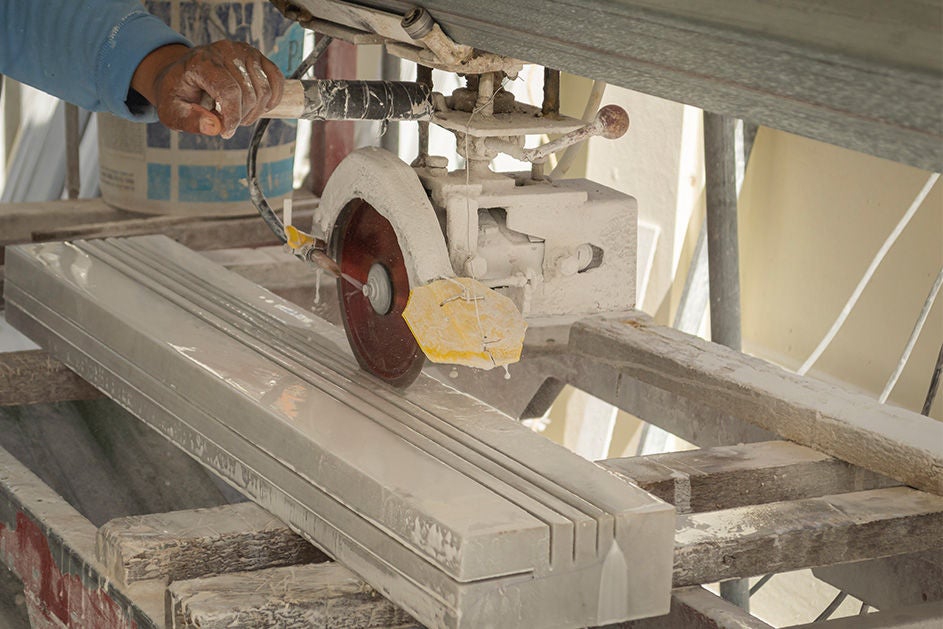
Silica is found in common materials such as natural stone, sand, concrete and mortar. These materials are used to make composite or engineered stone for benchtops, and can also be found in tiles, bricks and some plastics.
Silica dust is generated when materials containing crystalline silica are cut, drilled or ground. The dust particles are small and often invisible in the air.
Exposure to silica dust occurs most often in workplaces, including:
Stonemasons who cut and grind engineered stone benchtops face a particularly high risk of exposure. Workers in mining (coal and metalliferous), road and rail tunnelling and quarrying amongst others can also be exposed to very high levels of silica dust.
The ban on engineered stone does not protect workers from these industries.
Unlike asbestos-related diseases, which can take decades to develop, silicosis can appear as soon as one year after exposure, although it’s more commonly diagnosed around 10 years later.
You may not notice any symptoms straight away after breathing in silica dust. The time it takes to show symptoms will depend on factors such as how long ago you were exposed, how often you were exposed, your age and other general health.
As silicosis progresses or worsens, you may notice symptoms including:
Unfortunately, you cannot cure or reverse silicosis, but you can seek treatment. It’s important if you have been exposed to silica dust and experiencing any symptoms that you seek medical advice as soon as possible.
Your healthcare provider will take a full medical history, including details of your work history. It’s important to explain the type of work you have done and how long you worked in your each role.
They will then examine your chest and breathing and may order one or more of the following tests:
Silica dust can cause many different serious silica-related diseases, such as:
If you have been exposed to silica dust and suffer from silicosis or a silica-related disease, you may be eligible for compensation. This compensation can help ease the financial burden, replace lost wages and loss of earning capacity and help with expenses for medical treatment and therapies.
If you have been diagnosed with silicosis, you may be eligible to seek compensation for:
Recording the details of your silica dust exposure, regardless of how recent or long ago it was, can help any future compensation claims you may need to make.
Even if your exposure happened decades ago, or you’re unsure where it occurred, our specialised silicosis compensation lawyers can assess your situation and advise you on your eligibility for a claim.
To help protect your legal rights, it’s important to document any history of asbestos exposure.
We’ve created the free National Asbestos, Silica, Chemicals, Fumes and Dusts Register to record details of exposure. This can help with any future compensation claims you might need to make. Registration is free and carries no obligation.
 Any questions? Check out our FAQs.
Our silicosis lawyers have helped thousands of people successfully claim compensation. As a national firm, we have offices across Australia and can provide legal advice to help you get the best outcome.
You’ll also have the support of our dedicated Lung Clinical Nurse Consultant who will be with you throughout your diagnosis, tests, procedures, and treatment. They’re here to answer any health-related questions and provide the care and reassurance you need.

Contact our helpful team to confidentially chat about your situation. You can call us on 1800 111 222 or visit our contact us page for more options.

Our lawyers will arrange a time that works for you. Whether that's at your home, in hospital, or wherever you feel most comfortable. We’ll take the time to listen to your story and clearly explain your legal options.

We’re here to take care of the legal process so you can focus on your recovery.
Because many claims are time sensitive, we’ll make sure the right court documents are prepared and lodged on time, protecting your rights and peace of mind.

With your permission, we'll gather relevant medical records, work history, and exposure details to support your claim.

We aim to resolve your claim as quickly and smoothly as possible, and can fast-track the process when needed.
Most claims are finalised during pre-trial negotiations, but if your case does go to court, we’ll be by your side every step of the way.
Contact our team to confidentially chat about your situation.
Our expert lawyers will arrange a suitable time to come to you, whether that be at your home or in hospital.
Often your claim may be time sensitive. To protect your compensation rights, we will issue and submit a formal document to the court. This needs to be issued in your lifetime.
We gather relevant medical records, work history, and exposure details to support your claim.
We aim to resolve your claim as quickly as possible and can fast-track your claim if required. In the majority of cases, your compensation claim will be settled during the ‘pre-trial negotiations’ period. However, in the small cases that do go to court, we will be there to support you every step of the way.
We are Australia’s largest practicing asbestos, silica and occupational exposures legal team, with over 150 years of combined experience. Our multidisciplinary team expands across legal, nursing and dedicated support staff who are caring, compassionate, and committed to putting your needs and best interest first to achieve the best possible outcome.
Contact us today for a confidential, no-obligation consultation.
Need to speak to us sooner? Call us on 1800 111 222

Obligation-free consult
No Win, No Fee
Specialist Lung Nurse Support

Despite some positive changes to the law, silica remains a huge danger.
From 1 July 2024, certain types of high silica engineered stone benchtops cannot be imported, manufactured, or installed in Australia.
However, silica can be found in many other materials, and engineered stone benchtops remain in place, which can be dangerous when cut, ground, or scraped.
If your employer has failed to provide safe working conditions or has failed to follow regulations that prevent silica related lung diseases, they may be liable for silicosis damages.
In these cases, you may be eligible to claim for silicosis compensation through a workers' compensation scheme such as WorkCover, or from a superannuation or insurance policy.
The type of silicosis claim you can make depends on your state or territory you live in, and the circumstances of your silica dust exposure. Our experienced team of silicosis lawyers can explain your options and guide you through the process.
Speaking to an expert silicosis lawyer is the first step to getting your claim started. Our experienced team of lawyers can advise you on the documentation you will need to prepare your claim, which may include:
If your silicosis claim is successful, you may be entitled to compensation for:
Time limits for making a silicosis claim vary from state to state, so it's best to seek expert legal advice to determine if you are eligible to make a compensation claim.
 Contact our expert dust disease team
Our team of dedicated dust disease lawyers is committed to helping you with your claim.
/jonathan-walsh_qld_300x300px.jpg)
Principal Lawyer, Dust diseases
/MB_Melbourne_Sally-Weir_300x300px_WEB%20(1).jpg)
Principal Lawyer, Dust diseases
/MBL_LiamKelly_2022-01-05_300x300px.jpg)
/2022%20Ross%20Sottile%20(2)%20300x300px.jpg)
Associate, Dust diseases, Asbestos & Silica dust diseases, Work injury
Read more about mesothelioma.
/grahams-story-mesothelioma-compensation-claim-thumbnail.jpg)

/mesothelioma-sufferer-appeals-judgment-that-undermines-compensation-payouts-for-thousands-of-victims-of-asbestos-thumbnail.jpg)
/Mesothelioma-Awareness.jpg)
We have lawyers who specialise in a range of legal claims who travel to Australian Capital Territory. If you need a lawyer in Canberra or elsewhere in Australian Capital Territory, please call us on 1800 675 346.
We have lawyers who specialise in a range of legal claims who travel to Tasmania. If you need a lawyer in Hobart, Launceston or elsewhere in Tasmania, please call us on 1800 675 346.
/Steve_60x60.png)