
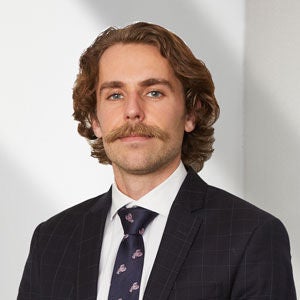
/MB_Michael-Stojanovski_VIC_300x300px_WEB.jpg)
Class actions
 Global search
Awa worked as a fuel tanker driver for nearly 20 years. In 2022, a shoulder injury at work led to scans that revealed metastatic prostate cancer, which had spread to his spine. Following emergency surgery, he was left paraplegic.
What began as a WorkCover claim became an investigation into his long-term exposure to petrochemical vapours at work. With support from Maurice Blackburn and the TWU, Awa secured compensation for both his injury and occupational disease, providing financial security for his family and helping raise awareness of similar risks faced by other workers.
Awa had worked in the transport industry since 2005, spending much of his career delivering fuel.
It was physical work that involved regularly loading and unloading fuel tankers and handling products including petrol, diesel, and jet fuel.
In July 2022, Awa was loading his tanker at a fuel terminal when he injured his right shoulder while operating a hose connected to a faulty loading arm.
“I tore my rotator cuff in my shoulder,” says Awa.
At first, his treatment followed the path that might be expected after a workplace shoulder injury. He underwent rehabilitation, saw specialists and began preparing for possible surgery.
Then a scan changed everything.
Doctors identified an unexpected lesion in Awa’s right scapula.
“They came back to me and said, ‘Well, we can’t see you any further because we’ve realised you’ve got lesions on your shoulder,’” Awa recalls.
Further investigation revealed that Awa had metastatic prostate cancer. The cancer had spread to his bones, including his spine.
Until then, Awa had no idea he was living with cancer.

Awa’s condition quickly became much more serious than the shoulder injury that had first taken him to the doctor.
The cancer affecting his spine required emergency surgery to remove the spinal tumour. Tragically, the spinal damage left Awa paraplegic.
He later underwent radiation therapy to his thoracic spine and right scapula.
The consequences for Awa and his family were enormous.
He spent around six and a half months in hospital and was separated from his family for significant periods. At the same time, he was confronting the reality that he could no longer work in the career he had known for almost 20 years.
“I had no money I had no job. I lost my job. I couldn’t work,” says Awa.
For someone who had spent much of his adult life working to provide for his family, the uncertainty that followed was difficult.
I first met Awa after he was referred to Maurice Blackburn by the TWU for advice about his right shoulder injury.
At that point, Awa was looking for help with his WorkCover entitlements relating to his shoulder. There was no occupational disease claim relating to his cancer.
We opened a WorkCover claim for the shoulder injury and ultimately resolved both an impairment claim and a common law claim for Awa.
The common law claim presented an unusual challenge.
On its own, Awa’s shoulder injury was comparatively modest when placed alongside the devastating impact of his cancer and paraplegia.
But Awa’s circumstances also meant that the consequences of that shoulder injury were much greater than they might have been for another person.
Because Awa was now paraplegic, he relied heavily on his arms for mobility, transfers and day-to-day independence. An injury affecting one of his arms therefore had a significant impact on his life.
In Awa’s case, we successfully argued that the impact of his shoulder injury needed to be considered in the context of his paraplegia and his increased reliance on his arms.

While working on Awa’s shoulder claim, something about his story stayed with me.
Several years earlier, I had acted for another fuel tanker driver with an eerily similar experience.
That client had also injured his right shoulder while operating a fuel hose. He had also undergone scans because of that injury. Those scans had also unexpectedly identified cancerous lesions.
The similarities made me wonder whether there could be a connection between the work these drivers had performed and their illnesses.
Awa had spent many years working around fuel and other petrochemical products. That work could involve exposure to petrochemical vapours, including benzene.
Until we raised the possibility with him, Awa had never been told his cancer might have any connection with his employment.
“No, not at all,” Awa says.
“I wasn’t even interested in going down that track. I just wanted some sort of compensation for my shoulder injury.”
Working with colleagues in our occupational diseases team, we began investigating whether Awa’s prostate cancer may also be connected to his work.
Occupational disease claims can involve complicated questions about what a worker was exposed to during their career and what contribution that exposure may have made to the risk of developing a particular illness.
In Awa’s case, we obtained medical evidence supporting an increased risk of prostate cancer associated with his occupational exposure to petrochemical vapours, including benzene.
His statutory claim was initially rejected.
We challenged that decision and commenced court proceedings.
Ultimately, the claim resolved successfully, and Awa received the statutory maximum impairment benefit in recognition of his prostate cancer and resulting paraplegia.
After resolving Awa’s statutory claim, we pursued a common law claim relating to his loss of earning capacity.
The claim required detailed evidence about Awa’s work history, his exposure, and the relationship between that exposure and his illness.
In July 2026, the claim was successfully resolved.
For Awa, compensation cannot undo what has happened or restore the life he had before his diagnosis and paraplegia. But it has provided greater financial security for him and his family as they look to the future.
“With the success I’ve had with Michael and his team, it’s given me and my family a future and a hope,” says Awa.
For someone who had spent almost two decades working to provide for his family, that sense of security has been an important part of the outcome.
For Awa, his case is now about more than his own compensation.
He wants other workers, particularly those who have spent years working with fuel and petrochemical products, to understand the potential risks they may have faced and to seek advice if they have concerns about their health.
“One of my main goals now is to raise awareness among other workers in this industry,” he says.
Throughout his journey, Awa has also valued the support and sense of community he found among fellow drivers and TWU members.
That connection remains important to him.
“I care about my mates,” he says.
By sharing his experience, Awa hopes other workers will feel more confident asking questions about their health and the conditions they have worked in.
“I hope we can bring this more to light and hopefully see some change.”

Awa originally came to Maurice Blackburn for advice about an injured shoulder.
Neither he nor I could have known where that first conversation would ultimately lead.
Awa’s experience shows how important it can be to look at the full picture when someone is injured or becomes unwell. What began as a claim for a shoulder injury ultimately raised much broader questions about his working history and years of exposure to petrochemical vapours.
For Awa, pursuing those questions resulted in successful compensation claims relating to both his shoulder injury and his occupational disease.
More importantly, he hopes sharing his experience will encourage other workers to ask questions about their own health and working conditions.
If you have been injured at work, or have developed an illness that you believe may relate to substances you were exposed to during your employment, Maurice Blackburn can advise you about your rights and the compensation that may be available.

Use our free online claim check tool and find out in minutes if you're eligible for workers' compensation.
Our specialist work injury lawyers are here to help. If you've suffered an injury at work that has affected your physical or psychological wellbeing, we can help you get back on track so you can focus on getting better. Find out how we can assist you with your work injury claim.
Thanks very much for your message.
Our team has received your enquiry and will get back to you as soon as we can.
Need to speak with us sooner? Please call us on 1800 111 222. We take calls from 8:30am - 7:00pm Monday to Friday.

Read more about work injuries
We are here to help. Give us a call, request a call back or use our free claim check tool to get in touch with our friendly legal team. With local knowledge and a national network of experts, we have the experience you can count on.
We have lawyers who specialise in a range of legal claims who travel to Australian Capital Territory. If you need a lawyer in Canberra or elsewhere in Australian Capital Territory, please call us on 1800 675 346.
We have lawyers who specialise in a range of legal claims who travel to Tasmania. If you need a lawyer in Hobart, Launceston or elsewhere in Tasmania, please call us on 1800 675 346.


/healthcare-worker-psychological-injury-workcover-thumbnail.jpg)
/palm-workers-rights-australia-thumbnail.jpg)
/tradies-national-health-month-thumbnail.jpg)
/nt-diesel-mechanic-insurer-case-thumbnail.png)