
Class actions
 Global search
A visit to your local swimming pool should be safe. Whether you're swimming laps, supervising children or enjoying recreational facilities, you have the right to expect that reasonable steps have been taken to protect your health and safety.
When aquatic centres fail to manage risks, the consequences can be serious. If you've been injured due to unsafe conditions at a public swimming pool, understanding your legal rights is an important first step.
This article explores common pool safety concerns, the responsibilities of aquatic centre operators, and when a public liability claim may be available.
For generations, Australians have trusted their local swimming pools as safe places for exercise, recreation, family fun, and sometimes just a spot to cool down in summer. While most visits pass without incident, serious injuries can occur when aquatic centres fail to maintain appropriate safety standards.
Swimming pool operators have a responsibility to provide a safe environment for visitors. That includes maintaining pool facilities, managing water quality, ensuring appropriate supervision, addressing hazards promptly, and implementing effective safety procedures.
When those responsibilities are neglected, the consequences can range from minor injuries to serious, life-changing harm.
If you or someone you love has been affected by a pool-related incident, it’s important to understand your legal rights.
Many people associate pool-related injuries with slips or falls, but hazards at aquatic centres can take many forms, including:
These hazards can result in a range of injuries, including fractures, soft tissue injuries, head injuries, chemical burns, respiratory issues, psychological injuries and, in some cases, permanent impairment.
Operators of public swimming pools and aquatic centres have a legal duty to take reasonable steps to protect visitors from foreseeable risks of harm. This may include:
If an aquatic centre fails to meet these obligations and someone is injured as a result, the operator may be liable for the harm caused.
Swimming pools can pose serious health risks if they're not properly maintained. A recent incident at Broadmeadows Aquatic and Leisure Centre highlights the importance of robust safety systems and procedures in public swimming facilities.
Nine Victorians were hospitalised, and more than 40 others were affected after a chemical incident at the leisure centre. Emergency services responded to reports of a strong gas smell inside the facility, with approximately 200 people evacuated while crews worked to ventilate the building.
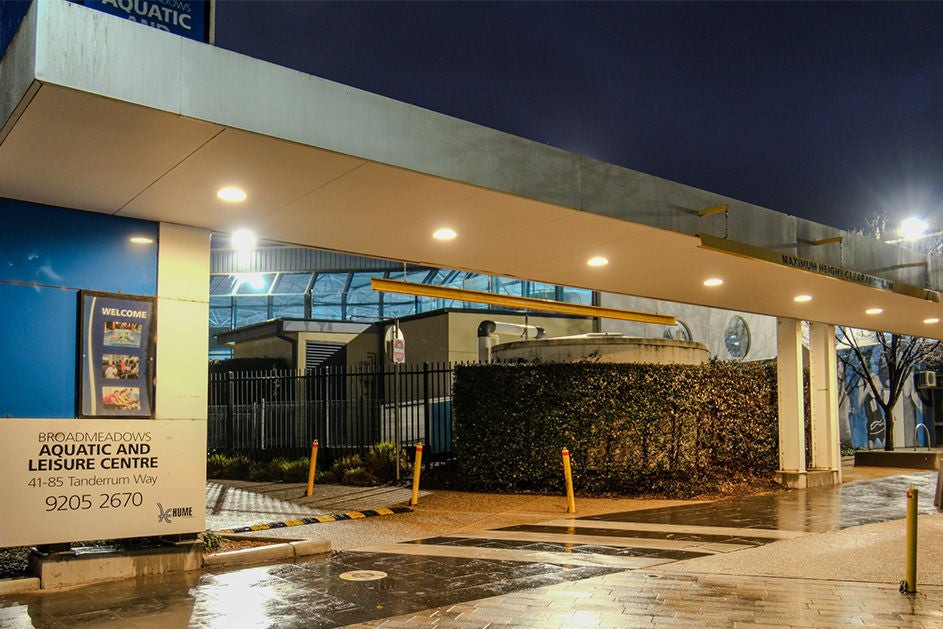
While incidents like this are relatively uncommon, they serve as an important reminder that aquatic centres have a responsibility to identify and manage risks before they cause harm.
Chemical exposure is just one of several safety concerns that can arise in swimming pools and aquatic centres. Other risks may include slips and falls on wet surfaces, faulty equipment, inadequate supervision, poorly maintained facilities, and failures in safety procedures or emergency response protocols.
When safety systems break down, the consequences can be serious, particularly for children and other vulnerable patrons. Exposure to pool chemicals such as chlorine or sodium hydrogen sulphate can lead to respiratory issues, skin irritation, eye injuries and, in some cases, chemical burns.
If you have been injured at a public swimming pool or aquatic centre, you may be entitled to compensation if your injury was caused by someone else's negligence.
Examples may include injuries resulting from:
To make a successful public liability claim, you generally need to show that:
If you've been injured at a public swimming pool or aquatic centre, you don't have to navigate the claims process on your own. Strict time limits apply. Our public liability lawyers can help with any questions you may have. Contact us today to find out if you have a claim.

Use our free claim check tool now
If you've been hurt in a public place, including a sports field, rental property, path or in a store, our experienced team of public liability lawyers can help.
Thanks very much for your message.
Our team has received your enquiry and will get back to you as soon as we can.
Need to speak with us sooner? Please call us on 1800 111 222. We take calls from 8:30am - 7:00pm Monday to Friday.

Read more about public liability law
 Public place injury
 Public place injury
 Public place injury
 Public place injury
We are here to help. Give us a call, request a call back or use our free claim check tool to get in touch with our friendly legal team. With local knowledge and a national network of experts, we have the experience you can count on.
We have lawyers who specialise in a range of legal claims who travel to Australian Capital Territory. If you need a lawyer in Canberra or elsewhere in Australian Capital Territory, please call us on 1800 675 346.
We have lawyers who specialise in a range of legal claims who travel to Tasmania. If you need a lawyer in Hobart, Launceston or elsewhere in Tasmania, please call us on 1800 675 346.